
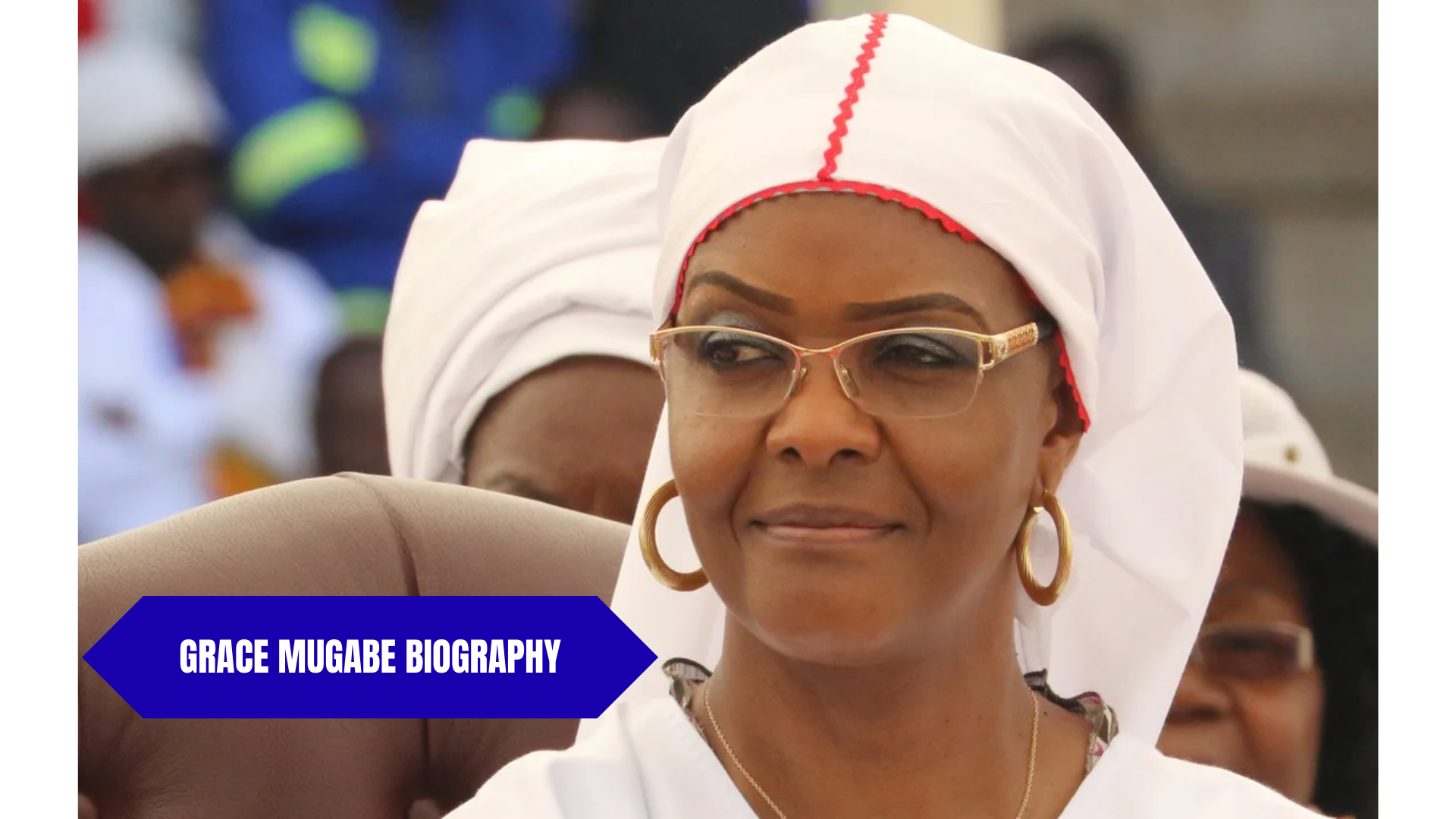
Grace Mugabe Biography: Age, Husband, Children, Net Worth
Grace Mugabe is one of the most controversial and influential political figures in modern Zimbabwean history.
As the wife of former Zimbabwean President Robert Mugabe, she rose from being a presidential secretary to becoming the First Lady of Zimbabwe and an active political player within the ruling party, ZANU–PF.
Her political rise, public statements, and involvement in party succession battles made her a powerful and polarizing personality. In this detailed Grace Mugabe biography, we explore her early life, education, marriage, political career, controversies, business interests, and legacy.
Early Life
Grace Ntombizodwa Marufu was born on July 23, 1965, in what was then Rhodesia (now Zimbabwe). She grew up in a modest family and received her early education locally. Unlike many political figures who rise through activism or legal careers, Grace’s path to prominence was unconventional.
Before entering public life, she worked as a secretary in the office of the President of Zimbabwe. It was during this period that she met Robert Mugabe, who was then married to his first wife, Sally Mugabe.
Her relationship with Robert Mugabe eventually became public, leading to widespread attention and criticism, especially since Mugabe was still married at the time.
Marriage to Robert Mugabe
Grace Mugabe married Robert Mugabe in 1996 after the death of his first wife, Sally Mugabe, in 1992. Their wedding ceremony was a grand event attended by political elites and international dignitaries.
Despite a significant age difference of over 40 years, their marriage became central to Zimbabwe’s political landscape. Grace Mugabe became Zimbabwe’s First Lady and quickly gained influence within political circles.
She and Robert Mugabe had three children together: Bona, Robert Jr., and Chatunga. Over time, Grace transitioned from a private family figure to a politically vocal and assertive public personality.
Rise to Political Influence
Grace Mugabe’s political journey formally began when she joined the ruling party, ZANU–PF. Initially seen as simply the President’s spouse, she gradually became deeply involved in party activities.
Entry into ZANU–PF
In 2014, she was appointed as the head of the ZANU–PF Women’s League. Her rapid political rise surprised many observers and raised questions about internal party dynamics.
Her public speeches often criticized senior party officials and positioned her as a defender of her husband’s leadership. This earned her both loyal supporters and fierce critics.
Role in Succession Politics
One of the most significant aspects of Grace Mugabe’s political career was her involvement in succession politics within ZANU–PF. As Robert Mugabe aged, speculation grew about who would succeed him.
Grace was widely believed to be aligned with a faction known as “G40,” which opposed then Vice President Emmerson Mnangagwa. Her outspoken criticism of Mnangagwa intensified political tensions in Zimbabwe.
The 2017 Political Crisis
The turning point in Grace Mugabe’s political life came in November 2017. After Vice President Emmerson Mnangagwa was dismissed, the Zimbabwean military intervened in what became a historic political shift.
The military operation effectively ended Robert Mugabe’s 37-year rule. He resigned on November 21, 2017, marking the end of one of Africa’s longest presidencies.
Grace Mugabe was widely believed to have influenced the decision to remove Mnangagwa, which may have contributed to the backlash that led to the intervention.
Following these events, Emmerson Mnangagwa became President of Zimbabwe, and Grace Mugabe’s political influence dramatically declined.
Controversies and Public Criticism
Grace Mugabe’s public image has been marked by numerous controversies, both political and personal.
Allegations of Extravagance
She was often criticized for her lavish lifestyle. Reports claimed she owned multiple properties, including the well-known “Blue Roof” mansion in Harare. Her expensive shopping trips abroad earned her the nickname “Gucci Grace.”
Assault Allegations
In 2017, Grace Mugabe faced allegations of assault in South Africa involving a model. The incident attracted international media attention and further damaged her reputation globally.
Political Ambitions
Many critics accused her of attempting to position herself as Robert Mugabe’s successor. Though she never officially ran for the presidency, her political rhetoric suggested strong ambitions within ZANU–PF.
Business Interests and Wealth
Grace Mugabe was also involved in business ventures, particularly in agriculture. She owned dairy farms and was linked to several commercial properties in Zimbabwe.
Her net worth has been the subject of speculation, with various reports suggesting substantial wealth tied to family assets and investments.
However, precise figures remain unverified, as public records on the Mugabe family’s finances are limited.
Life After 2017
After Robert Mugabe’s resignation and later death in 2019, Grace Mugabe largely retreated from the public eye. Robert Mugabe passed away on September 6, 2019, in Singapore.
Since then, Grace Mugabe has maintained a lower profile, though she occasionally appears in legal disputes and discussions surrounding her late husband’s legacy.
Her political future remains uncertain, but her impact on Zimbabwe’s political history is undeniable.
Grace Mugabe’s Legacy
Grace Mugabe’s legacy is complex and deeply divisive. Supporters view her as a strong woman who defended her husband and played an active role in politics. Critics argue that her political ambitions contributed to instability during Zimbabwe’s leadership transition.
Regardless of perspective, her influence during the final years of Robert Mugabe’s presidency remains significant.
She symbolizes a unique chapter in Zimbabwe’s political evolution — one marked by power struggles, factional battles, and dramatic change.
Frequently Asked Questions (FAQs)
1. Who is Grace Mugabe?
Grace Mugabe is the former First Lady of Zimbabwe and the wife of former President Robert Mugabe.
2. When was Grace Mugabe born?
She was born on July 23, 1965.
3. How did Grace Mugabe become politically influential?
She joined ZANU–PF and became head of the Women’s League, playing a key role in internal party politics.
4. What happened in Zimbabwe in 2017?
A military intervention led to Robert Mugabe’s resignation, ending his long rule. Emmerson Mnangagwa became president.
5. Is Grace Mugabe still active in politics?
Since 2017, she has maintained a relatively low public profile.
Conclusion
Grace Mugabe’s biography reflects a dramatic rise from presidential secretary to one of Zimbabwe’s most powerful women. Her journey through marriage, political involvement, controversies, and national upheaval shaped modern Zimbabwean politics.
While opinions about her remain divided, her role in the final chapter of Robert Mugabe’s presidency ensures her place in Zimbabwe’s political history.
Her life story serves as a powerful example of how personal relationships, ambition, and politics can intersect to shape a nation’s destiny