
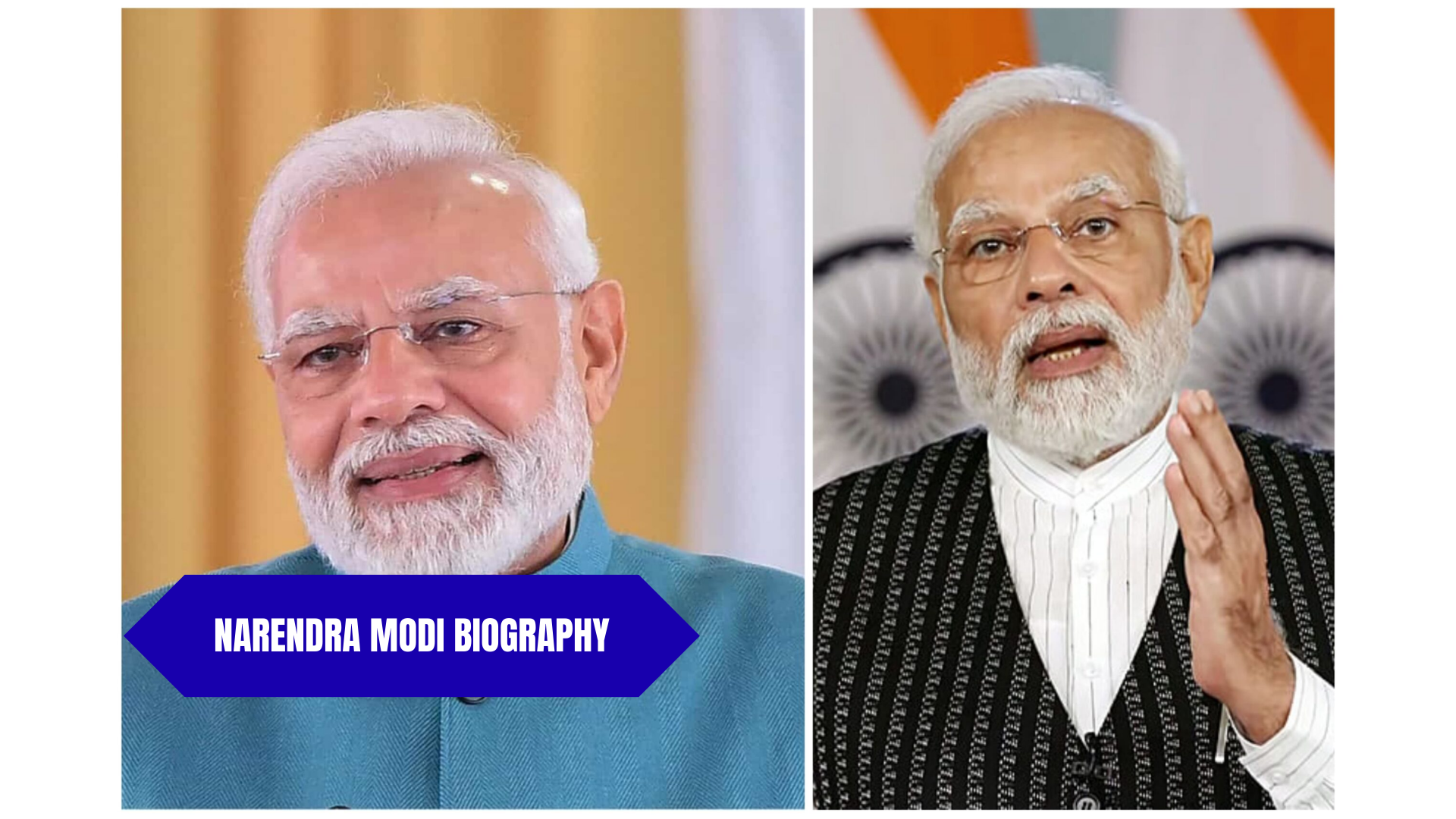
Narendra Modi Biography: Age, Wife, Children, Politics
The Narendra Modi biography is a compelling story of resilience, ambition, and political transformation. Narendra Modi is one of the most influential political leaders of the 21st century. Serving as the Prime Minister of India since 2014, he has reshaped the nation’s political landscape, economic direction, and global standing.
From humble beginnings as a tea seller to becoming the leader of the world’s largest democracy, Modi’s journey is both inspiring and controversial. This comprehensive biography explores his early life, education, political career, major achievements, leadership style, policies, and legacy.
Early Life
Narendra Damodardas Modi was born on September 17, 1950, in Vadnagar, a small town in Gujarat, India. He grew up in a modest family belonging to the Ghanchi community. His father, Damodardas Modi, ran a tea stall at the local railway station, where young Narendra helped out during his childhood.
Growing up in a financially constrained environment, Modi developed a strong work ethic at a young age. His early experiences shaped his worldview and later became a key part of his political narrative.
Education
Modi completed his schooling in Vadnagar and later earned a Bachelor’s degree in Political Science from the University of Delhi. He subsequently obtained a Master’s degree in Political Science from Gujarat University.
In his youth, Modi became associated with the Rashtriya Swayamsevak Sangh (RSS), a Hindu nationalist volunteer organization. The RSS played a crucial role in shaping his ideological beliefs and leadership style.
Entry into Politics
Narendra Modi’s formal political career began when he joined the Bharatiya Janata Party (BJP), the political wing aligned with RSS ideology.
Bharatiya Janata Party (BJP) provided Modi a platform to showcase his organizational and strategic skills. He quickly rose through the ranks due to his dedication and strong communication abilities.
By the 1990s, he was a key strategist within the BJP, contributing significantly to the party’s expansion across India.
Chief Minister of Gujarat (2001–2014)
In 2001, Narendra Modi became the Chief Minister of Gujarat. His tenure marked a turning point in his political career.
During his leadership, Gujarat witnessed significant economic growth, infrastructure development, and industrial investment. The “Vibrant Gujarat” summit attracted global investors and enhanced the state’s industrial reputation.
However, his tenure was also marred by the 2002 Gujarat riots, which drew both national and international scrutiny. Despite controversy, Modi maintained political dominance in Gujarat, winning multiple consecutive elections.
Becoming Prime Minister of India (2014)
In 2014, Narendra Modi led the BJP to a historic victory in the general elections. For the first time in three decades, a single party secured an absolute majority in India’s Parliament.
India elected Modi as its 14th Prime Minister. His campaign focused on development, governance reform, and economic revival under the slogan “Achhe Din” (Good Days).
In 2019, he secured a second term with an even stronger mandate, solidifying his position as one of India’s most powerful leaders.
Major Policies and Reforms
1. Economic Reforms
- Demonetization (2016): Withdrawal of ₹500 and ₹1000 notes to curb black money.
- Goods and Services Tax (GST): Unified tax system implemented across India.
- Make in India Initiative: Boost to manufacturing and foreign investment.
2. Social Welfare Schemes
- Swachh Bharat Abhiyan (Clean India Mission)
- Pradhan Mantri Jan Dhan Yojana (Financial inclusion)
- Ujjwala Yojana (Free LPG connections)
3. Digital India
The Digital India initiative transformed governance through technology-driven solutions, enhancing transparency and accessibility.
Foreign Policy and Global Impact
Under Modi’s leadership, India strengthened relations with global powers including the United States, Japan, and European nations. He emphasized economic diplomacy and strategic partnerships.
India’s participation in global forums like the G20 elevated its global profile.
Leadership Style
Narendra Modi is known for:
- Strong oratory skills
- Centralized decision-making
- Focus on nationalism
- Direct communication with citizens via radio program “Mann Ki Baat”
His charismatic leadership style has earned him both ardent supporters and vocal critics.
Awards
Narendra Modi has received several international honors, including:
- UN Champions of the Earth Award
- Highest civilian awards from multiple countries
He has frequently appeared in global rankings such as Time Magazine’s Most Influential People list.
Controversies
Like many powerful leaders, Modi’s career includes controversies:
- 2002 Gujarat riots
- Demonetization’s economic impact
- Citizenship Amendment Act (CAA)
Despite criticism, his political base remains strong.
Personal Life
Narendra Modi is known for his disciplined lifestyle. He practices yoga regularly and follows a vegetarian diet. Although married at a young age to Jashodaben Modi, he has largely lived a life devoted to politics and public service.
FAQs
1. When was Narendra Modi born?
Narendra Modi was born on September 17, 1950.
2. What is Narendra Modi’s educational qualification?
He holds a Master’s degree in Political Science.
3. When did Narendra Modi become Prime Minister?
He became Prime Minister in 2014.
4. How many terms has Narendra Modi served?
He has served two consecutive terms since 2014.
5. What political party does Narendra Modi belong to?
He belongs to the Bharatiya Janata Party (BJP).
Conclusion
The Narendra Modi biography is a remarkable account of determination and leadership. From modest beginnings to leading India on the global stage, his journey symbolizes ambition and transformation. Whether admired or criticized, Narendra Modi remains a defining figure in modern Indian politics.
His policies, leadership approach, and political strategy continue to influence not only India but global geopolitics. As history unfolds, Narendra Modi’s legacy will be evaluated as one of the most impactful in contemporary India